Built for the Most Demanding Position in Hockey
The Goalie Slide Board: Off-Ice Training Built for Your Position
Playing goal is unlike any other position in hockey. While skaters push off in long, powerful strides, goalies live and die by their ability to shuffle laterally at explosive speed, drop into a butterfly in a fraction of a second, recover from the ice immediately, and cover post-to-post angles with precision timing. A training tool designed only for forward skating does nothing for you.
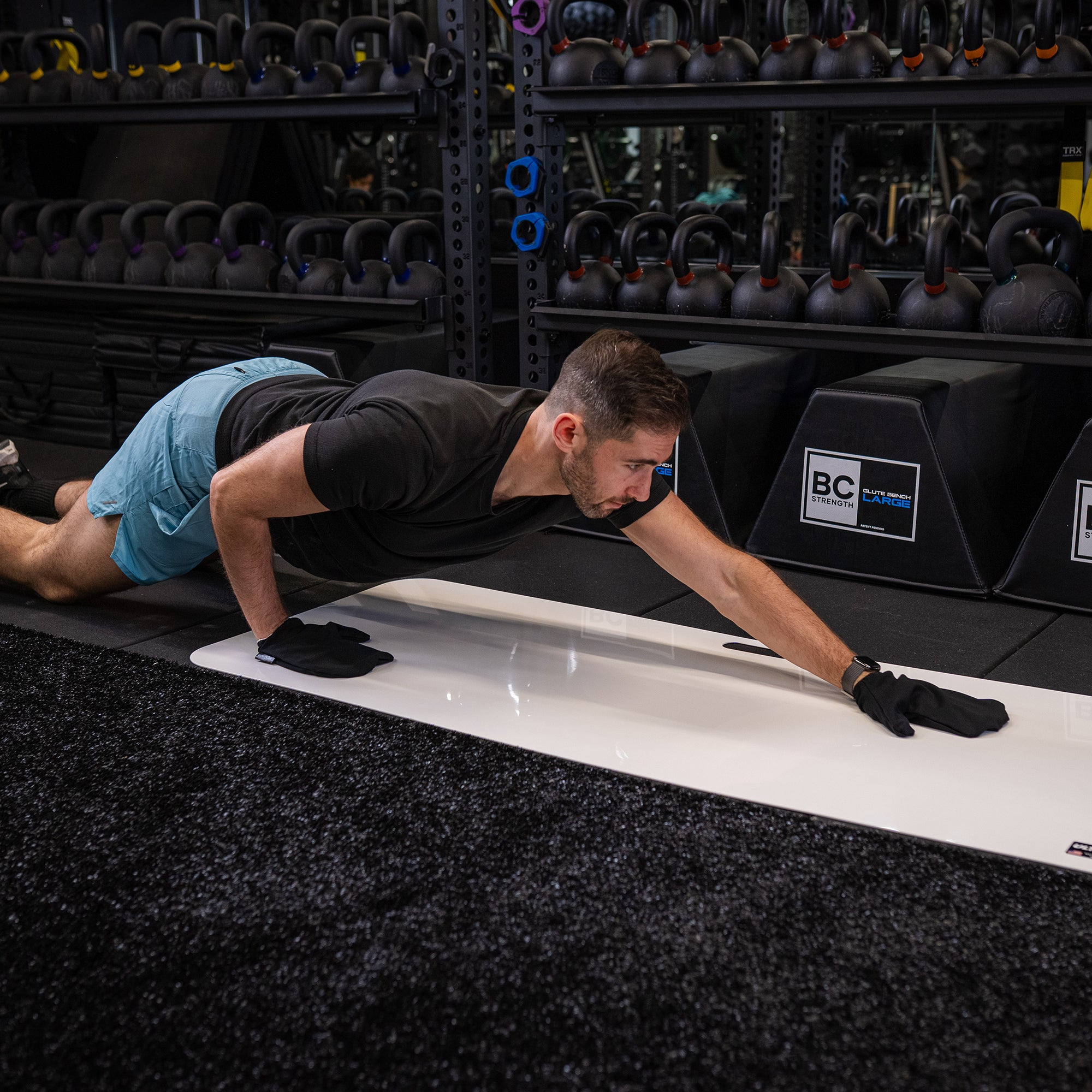
UltraSlide goalie slide board training was built around exactly what you do in the crease. The slick polymer surface and precision bumpers let you rehearse the specific lateral shuffle patterns, butterfly drops, and crease mobility drills you need to stop pucks — without stepping on the ice. Train in your garage, basement, or team facility year-round.
"The UltraSlide Octagon board has been invaluable for goalies, providing the freedom to move in multiple directions in a butterfly position — replicating real in-game situations." — Mark Nemish, Former Strength & Conditioning Coach, Washington Capitals
Why Goalie Training Is Different
And Why Most Tools Get It Wrong
Standard hockey training tools focus on stride power and linear speed. But a goalie's movement vocabulary is entirely different:
- Butterfly saves require explosive adductor (inner groin) strength and hip mobility to drop and flare the pads outward
- Post-to-post shuffles demand rapid lateral push-off with minimal weight transfer — pure crease efficiency
- Butterfly recoveries test the ability to explosively reload from the ice, driven by hip abductors, glutes, and core
- Telescoping movements - extending out toward a shooter and recovering back to the post — require simultaneous leg drive and balance control
- Multi-directional agility means goalies must be able to change direction instantaneously in any plane, not just side to side
The UltraSlide slide board trains all of these patterns. Its frictionless surface directly challenges the adductors and hip abductors on every movement, building the muscle groups that matter most for butterfly mechanics and crease mobility. And because you can simulate butterfly positioning and lateral shuffle patterns on the board, your off-ice reps transfer directly to your on-ice positioning.
Performance Impact:
What UltraSlide Builds in Goalies
| Goalie Skill | How UltraSlide Develops It |
|---|---|
| Butterfly Speed & Width | Strengthens adductors and hip flexors so you drop faster and wider, covering more of the net in the butterfly position. |
| Post-to-Post Shuffle Speed | Trains the rapid lateral push-and-glide pattern used for crease mobility — shorter strokes, faster transitions than a skater. |
| Butterfly Recovery | Builds explosive hip abductor and glute strength so you reload from the ice immediately and are never caught down a second too long. |
| Edge Control & Balance | Sharpens proprioception and single-leg stability, critical for reading and reacting to broken plays and scrambles. |
| Crease Mobility Under Fatigue | Conditions goalies to maintain sharp lateral movement deep into the third period, when most goals are scored. |
| Groin & Hip Injury Resilience | Low-impact, closed-chain lateral movement builds the inner groin and hip complex — the most commonly injured areas in goalies — without the repetitive pounding of on-ice practice. |
| Core & Trunk Stability | Every shuffle and recovery fires the core stabilizers that keep your chest square to the shooter and your rebound angles under control. |
5 Goalie-Specific Slide Board Exercises
These five drills target the exact mechanics and muscle groups goalies use every shift. Perform 2–3 sessions per week during the off-season and 1–2 during the season as active recovery and movement reinforcement.
1. Goalie Lateral Shuffle
Setup: Stand in the center of the board in a low athletic stance — knees bent, chest up, weight on the balls of your feet (exactly your ready position in the crease).
Execution: Push laterally off one bumper with a sharp inner-leg drive, glide to the opposite bumper, and immediately push back. Keep your hips square, your stick on the surface, and your head up. Progress to rapid, game-speed repetitions in 10–15 second bursts.
Goalie Benefit: Directly replicates post-to-post crease movement. Builds the lateral push-off and glide efficiency that makes your crease coverage look effortless.
2. Butterfly Drop and Recovery
Setup: Start standing at one end of the board in your ready stance.
Execution: Drive laterally across the board, then at the opposite bumper drop into a butterfly position (knees together, pads flared outward). Hold for 1 second, then explosively recover to your feet and shuffle back. Repeat for 6–8 reps each direction.
Goalie Benefit: The slick surface challenges you to control the drop without slamming into the ground, building the adductor and hip flexor control that makes your butterfly technically sound and sustainable late in games.
3. Telescoping Slide
Setup: Start at one bumper in a low crouch.
Execution: Drive diagonally forward toward the center of the board (simulating challenging an angle), then push back to the bumper behind you, sliding in a controlled V-pattern. Alternate sides. Use a 10-second work interval with full recovery between sets.
Goalie Benefit: Trains the telescoping movement goalies use to challenge shooters while maintaining recovery positioning — one of the hardest movement patterns to drill off-ice.
4. Single-Leg Butterfly Recovery
Setup: Start in a kneeling butterfly position at one end of the board.
Execution: Drive one leg up and forward, pushing laterally into a one-leg recovery stance. Recoil and repeat on the other side. This is an advanced drill — use a support post or wall nearby until you have the stability to perform it freestanding.
Goalie Benefit: Isolates the one-leg push-off mechanics used to recover from a butterfly save and explode to cover a rebound. Builds the glute, quad, and hip stabilizers that make recoveries fast and authoritative.
5. Low-Stance Lateral Plyometrics
Setup: Stay in a continuous deep-knee bend (below parallel) for the entire drill. Set a timer for 20 seconds.
Execution: Perform rapid, short lateral shuffles in your goalie crouch — not full pushes from bumper to bumper, but quick, tight side-to-side movements as if tracking a puck moving across the slot. Keep your head still and your stick blade on the surface.
Goalie Benefit: Builds the hip and quad endurance to hold a deep, active crouch for extended periods — eliminating the drift and straightening up that gives shooters the corners they need.
Trusted by Elite Goaltending Programs
UltraSlide has been the off-ice training standard for nearly every NHL team, hundreds of NCAA programs, and professional goaltending coaches since 1993. When the coaches responsible for elite goaltenders choose a slide board, they choose UltraSlide — because nothing else replicates the lateral demands of the position with the same fidelity.
“UltraSlide slideboards have been a staple in my hockey strength and conditioning programs for 15+ years. They are the most durable and reliable piece of equipment for lateral off-ice conditioning. I highly recommend UltraSlide to any strength and conditioning coach who works with hockey players.”
— Sean Skahan, M.Ed., C.S.C.S.,
Former Head Strength & Conditioning Coach, Boston University Men's Ice Hockey
“I’ve been using UltraSlide slideboards for over 18 years with professional teams. The UltraSlide Octagon board has been invaluable for goalies, providing the freedom to move in multiple directions in a butterfly position — replicating real in-game situations.”
— Mark Nemish,
Former Strength & Conditioning Coach, Washington Capitals
Choose the Right UltraSlide for Goalie Training
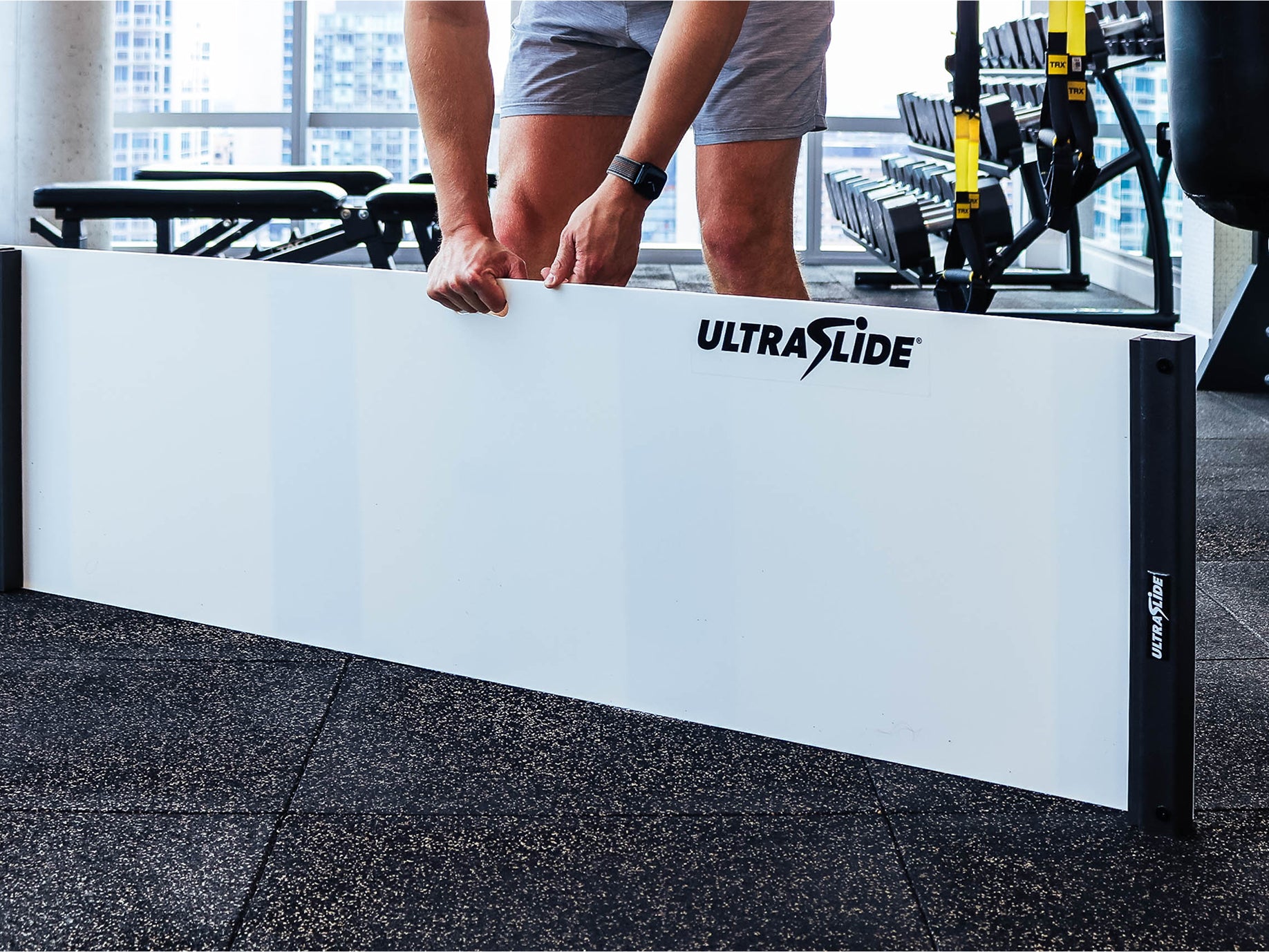
Not all slide boards are created equal. UltraSlide's commercial-grade polymer surface and hardwood bumpers provide the consistent, frictionless glide that goalie drills demand. Here's how to match the right board to your training setup:


Goalie Coach Recommendation
The UltraSlide 8 FT is the preferred choice for most goaltenders. The adjustable length allows you to shorten the board for quick butterfly drop-and-recovery drills or extend it to full length for crease shuffle conditioning. All models are commercial-grade, made in the USA with sustainable materials, include Slide Slippers and Slide Polish, and feature a non-slip backing. Custom team logos available.
Goalie Slide Board Training
Frequently Asked Questions
Can a goalie actually use a slide board to simulate butterfly saves?
Yes — and it’s one of the most effective ways to do it off-ice. Because the slide board surface offers almost no resistance to lateral movement, you can practice dropping into a butterfly position, controlling the drop, and recovering without the physical wear of dropping on ice or gym floors hundreds of times. Mark Nemish of the Washington Capitals specifically cites the slide board’s value for “moving in multiple directions in a butterfly position.”
What muscles does slide board training build for goalies?
The primary muscles developed are the hip adductors (inner groin), hip abductors (outer hip/glutes), hip flexors, quadriceps, and core stabilizers. These are precisely the muscles that power butterfly saves, post-to-post shuffles, and explosive recoveries. Goalies who train these muscle groups off-ice consistently report faster butterfly drops, wider pad coverage, and better recovery times between saves.
How is goalie slide board training different from regular hockey slide board training?
Skaters focus on full-length lateral strides that build explosive push-off power for open-ice skating. Goalie-specific slide board training emphasizes shorter, faster lateral shuffles that replicate crease mobility; butterfly drop-and-recovery patterns that load the inner groin and hips in a way skating never does; and low-stance endurance work that builds the ability to hold a deep crouch for extended periods without losing position.
How often should a goalie train on a slide board?
During the off-season, 2–3 sessions per week of 20–40 minutes delivers measurable improvement in lateral speed and butterfly mechanics within 4–6 weeks. During the season, 1–2 lighter sessions per week maintain conditioning and serve as low-impact active recovery between games. Because slide board training is low-impact and ACL-friendly, it can be used more frequently than high-impact plyometrics without overloading the joints.
What size UltraSlide should a goalie buy?
The UltraSlide 8 FT is the most versatile choice for goalies at any level. Its adjustable length (5–8 feet) lets you vary drills: shorter settings for butterfly drop-and-recovery work, longer settings for shuffle endurance conditioning. Taller goalies (6’2” and above) may prefer the UltraSlide 10 FT for maximum lateral range. For home use in tight spaces, the 6 FT model is an excellent starting point for all core goalie movement patterns.
Is slide board training safe for goalies recovering from a groin or hip injury?
UltraSlide is extensively used in physical therapy and athletic rehabilitation — particularly for ACL, groin, and hip recovery. The closed-chain, low-impact nature of slide board movement allows goalies to rebuild strength and range of motion in the adductors and hip complex without the jarring impact of on-ice practice. Always consult your athletic trainer or physical therapist before beginning any rehabilitative training program.

UltraSlide has been the off-ice training choice of professional and elite-level goaltenders for over 30 years. Every board is made in the USA from commercial-grade materials, backed by a 30-day return guarantee, and built to last a career.
Whether you’re a youth goalie building the fundamentals or a professional looking to sharpen your crease mechanics in the summer, UltraSlide gives you the off-ice tool to train the position— not just the sport.
Questions? Contact us at info@ultraslide.com or call toll-free 800-259-5356