


The Off-Ice Training Tool That Mirrors Every Stride You Take
The Skating Slide Board: Train the Stride Without the Ice
Every stride you take on the ice begins with one thing: a forceful lateral push through the hip, glute, and inner leg — a full extension against resistance, followed by a controlled glide and recovery. That movement pattern doesn't exist in any traditional gym exercise. Squats strengthen the legs vertically. Sprints train linear speed. Bikes condition the heart. But none of them teach your body to push sideways, glide, and snap back — the exact mechanics that determine how fast, how efficiently, and how powerfully you skate.
The UltraSlide skating slide board is the only training tool that replicates this movement exactly. Its commercial-grade polymer surface eliminates friction, recreating the glide of ice in any environment. The hardwood bumpers provide the resistance point your leg drives against — just like the boards or an imaginary skate blade edge. The result is an off-ice training session that transfers directly to the rink in a way no other equipment can match.
Whether you skate in hockey, speed skating, figure skating, or inline skating, the UltraSlide slide board is the most position-specific, movement-faithful training tool available — and it fits in your garage, basement, or training facility.
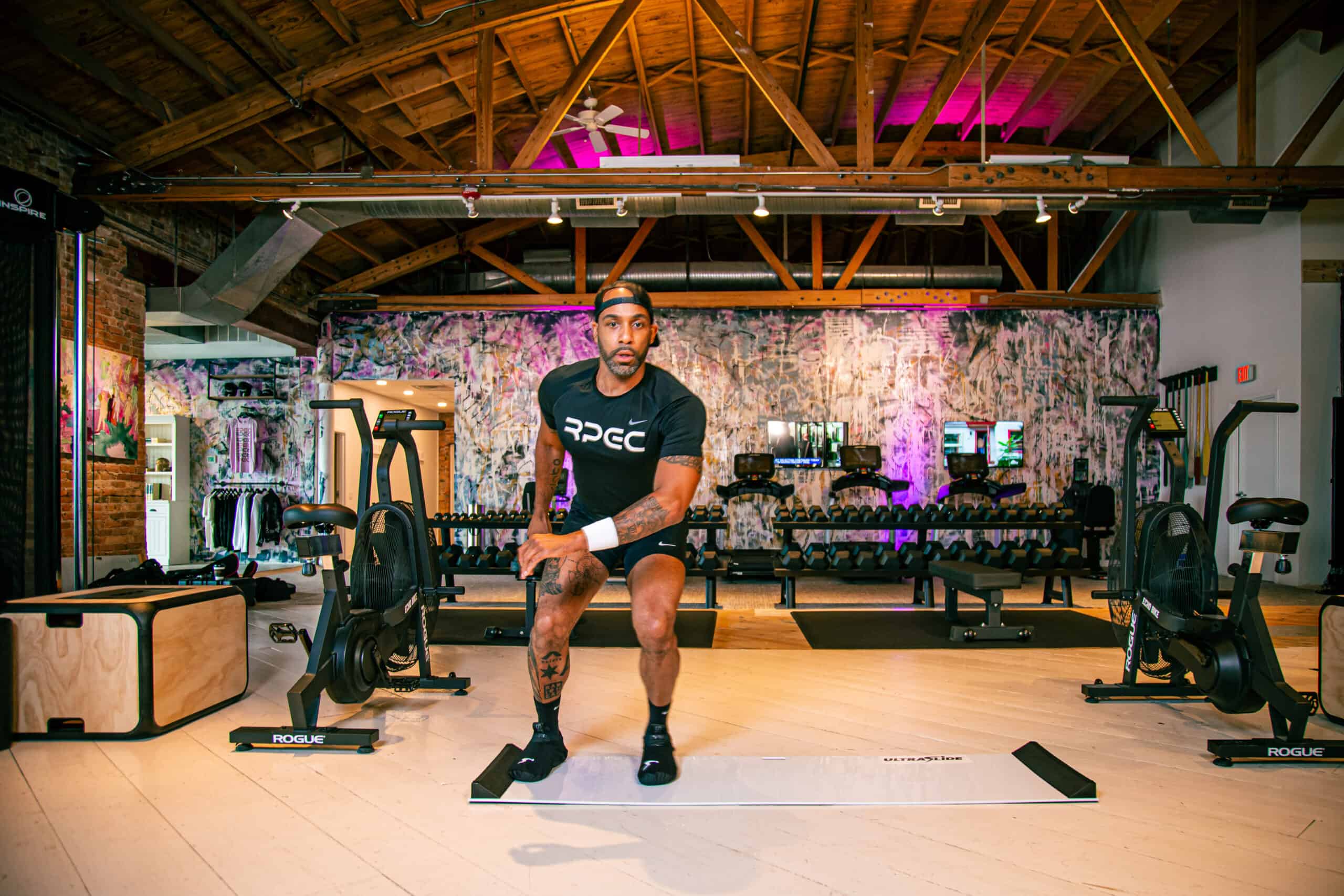
Why UltraSlide?
Literally every major skating discipline — ice hockey, long-track and short-track speed skating, figure skating, and inline racing — uses lateral push-and-glide as the engine of propulsion. UltraSlide replicates this in a closed-chain, low-impact format that builds skating-specific strength without the wear of ice time. Used by nearly every NHL team and top NCAA programs since 1993.
Why the Slide Board Is the Most Faithful Skating Simulation Available
Skating is a frontal-plane sport. The push, glide, and recovery happen primarily from side to side — not forward and backward. This is the defining characteristic that separates skating from every other locomotion sport, and it's the reason that conventional gym training, no matter how intense, leaves a measurable gap in skating-specific fitness.
UltraSlide's blog on lateral vs. linear training explains it plainly: "Many sports require movement not only forward and backward but also side to side. That is why adding lateral training is essential for developing agility, balance, and overall athletic ability." For skaters, lateral training isn't a supplement — it IS the sport.
What the Skating Stride Actually Demands
- Push-off power: Maximum force production through the hip adductors, glutes, and quads in a diagonal lateral direction — not straight down
- Full ankle extension: The final "snap" of the push-off that generates the last increment of stride power and clean edge push
- Glide control: Proprioception and single-leg balance on the glide leg while the push leg recovers — a skill nearly impossible to train without a sliding surface
- Stride recovery: Rapidly returning the push leg to center without losing momentum, driven by hip flexors and core stability
- Stride length and frequency: The combination of how far you push and how quickly you recover determines your skating speed over ice
- Eccentric leg control: The landing leg must absorb force and immediately redirect it — a demand that bilateral exercises never train
The UltraSlide surface challenges every one of these mechanics simultaneously. Every repetition on the board builds the neural patterns, muscle strength, and movement efficiency that make a faster, smoother, more powerful skater.
Lateral vs. Linear:
Why Most Training Leaves Skaters Undertrained
| Training Method | Muscles Targeted | Skating Transfer |
|---|---|---|
| Treadmill / Running | Hamstrings quads (sagittal) | Low — forward stride mechanics only |
| Barbell Squats | Quads, glutes (vertical load) | Moderate — builds leg strength but wrong plane |
| Stationary Bike | Quads, hamstrings (circular) | Low — cardio only, no lateral push pattern |
| UltraSlide Slide Board | Hip adductors, adductors, glutes, quads, core (frontal plane) | Very High — exact skating push-glide-recover pattern |
Performance Impact for Skaters
UltraSlide builds the specific physical qualities that determine skating performance — not general fitness that happens to help skating, but the precise muscle groups and movement patterns that power every stride.
| Skating Skill | How UltraSlide Develops It |
|---|---|
| Stride Power & Push-Off Force | Develops explosive hip abductor and glute strength — the engine of every skating push — through full lateral extension against the bumper. |
| Stride Length | Longer, more powerful lateral excursions on the board directly translate to a longer skating stride and more distance covered per push. |
| Stride Recovery Speed | Hip flexor and core conditioning on the board accelerates the return of the push leg, increasing stride frequency without sacrificing length. |
| Glide Balance & Edge Control | Single-leg stability on a frictionless surface trains proprioception and ankle control — the same demands as balancing on a skate blade mid-glide. |
| Skating Endurance | Continuous lateral training on the board builds the lactate threshold and muscular endurance to maintain full stride efficiency in the late stages of a race, game, or program. |
| Crossover Mechanics | Lateral weight transfer patterns on the board reinforce the hip and core control that makes crossovers smooth, powerful, and technically clean. |
| Injury Prevention | Low-impact, ACL-friendly lateral loading builds the groin, hip, and knee stabilizers most vulnerable in skating — reducing overuse injury risk year-round. |
Skating Slide Board Training Across Disciplines
The slide board was originally popularized in skating sports — UltraSlide's FAQ notes that "hockey and speed skating" were among the first and most natural applications. But the biomechanical reality is that any discipline built on a lateral push-and-glide stride benefits identically.
Ice Hockey Players
Hockey skating is a burst-and-recover sport. Every forward stride, crossover, and backward skate relies on a powerful lateral push and quick recovery. The slide board builds the stride power and edge control that separate average skaters from elite ones — and it conditions the hip and groin complex to handle the volume of a full season without breaking down.
- Off-season foundation training for stride power and conditioning
- In-season maintenance of lateral quickness and skating mechanics
- Groin and hip injury prevention through targeted lateral loading
Speed Skaters (Long-Track & Short-Track)
Speed skating is the purest expression of the lateral push-and-glide stride. The slide board is to speed skating what a rowing machine is to rowing — the closest available simulation of the sport-specific movement pattern. Top speed skating programs have used slide boards for decades as the primary off-ice conditioning tool because the mechanics are nearly identical: deep knee bend, full lateral push, glide recovery, powerful crossovers on the turns.
- Primary off-season conditioning tool for stride mechanics and muscular endurance
- Replicates the deep-knee skating position that is difficult to train with other equipment
- Crossover turn simulation for short-track cornering and long-track turn technique
Figure Skaters
Figure skating demands extraordinary edge control, single-leg balance, and lateral power for jumps and step sequences. The slide board builds the hip stability and balance that make edge landings cleaner and step sequences crisper — while providing the conditioning base that lets skaters train longer before fatigue degrades technical quality.
- Hip and core stability for controlled edge skating and footwork
- Single-leg glide balance that transfers to arabesque and spiral positions
- Low-impact conditioning that preserves joints during high-volume jump training
Inline & Roller Skaters
Inline skating and roller derby share the same fundamental push-and-glide mechanics as ice skating. Athletes in these disciplines often lack access to ice-specific training tools — the UltraSlide provides the identical lateral push pattern regardless of sport, building the hip, glute, and adductor strength that powers every stride and crossover.
- Sport-specific conditioning year-round regardless of rink or surface availability
- Stride and crossover mechanics for inline racing and roller derby footwork
5 Skating-Specific Slide Board Exercises
These five drills build the physical qualities that directly improve your skating stride. Perform 2–3 sessions per week for measurable on-ice gains within 4–6 weeks. Start with controlled, technique-focused reps and progress to full-speed intervals as your mechanics solidify.
1. Full Stride Speed Skaters
Setup: Stand at one bumper in a deep athletic crouch — knees bent well past 90 degrees, chest forward, weight centered. This is your skating position.
Execution: Drive powerfully off the bumper with a full lateral push through the hip, extending completely through the knee and ankle before landing on the opposite leg. Glide to the opposite bumper, absorb the landing with a bent knee, and immediately push back. Swing the recovery arm across the body as you would on ice. Progress from controlled striders to full-speed intervals of 15–20 seconds.
Skating Benefit: The most direct skating simulation available off-ice. Builds stride power, lateral endurance, and the neural pattern of push-glide-recover that your body executes on every ice stride. The full ankle extension on each push directly trains the final "snap" that separates powerful skaters from pedestrian ones.
2. Controlled Striders (Technique Focus)
Setup: Same starting position as Speed Skaters. Use a slower, deliberate tempo.
Execution: Glide from bumper to bumper using smooth, controlled lateral pushes. Pause for 1–2 seconds on each glide leg, focusing on balance, ankle stability, and a straight-line push. Keep your hips square and your upper body quiet. This is a technique drill, not a conditioning drill.
Skating Benefit: Isolates the glide balance component of the stride — the single-leg stability phase that most skaters neglect in training. Builds the proprioception and ankle strength that produces cleaner edges, better turning control, and more stable landings from jumps or crossovers.
3. Crossover Simulation
Setup: Stand sideways to the length of the board with one foot near the center, one near the bumper.
Execution: Step the outside foot across and in front of the inside foot while simultaneously pushing the inside leg out to the side on the slick surface — mimicking the crossover step used on turns. Alternate the crossover step rhythm in a continuous fluid motion, staying low throughout. Perform 10 repetitions each direction.
Skating Benefit: Directly trains the hip abduction and abduction mechanics of skating crossovers, the most technically demanding stride pattern. Builds the hip stability and weight transfer control that makes cornering efficient — critical for speed skaters, hockey players navigating turns, and figure skaters in step sequences.
4. Lateral Lunge Stride
Setup: Stand at one end of the board with your sliding foot on the board surface and your stationary foot on the floor beside the board.
Execution: Sit into a deep lateral squat on the stationary leg while sliding the board leg outward to maximum extension. Hold the extended position for 1 second, focusing on the feeling of a full skate push — hip extended, knee tracking, ankle flexed. Return and repeat for 8–10 reps per side.
Skating Benefit: Isolates the concentric push (driving the stationary leg) and trains full hip extension on the push leg — identical to the mechanics of a maximum-effort skating stride. Builds the quad, glute, and hip abductor strength that generates stride power, while the eccentric return trains the control needed for clean edge recovery.
5. Stride Endurance Intervals
Setup: Full-length board. Set a timer for work-rest intervals.
Execution: Perform 20 seconds of maximum-speed lateral strides (full push, full glide, no shortcuts), followed by 10 seconds of slow active recovery striders. Repeat for 6–10 rounds. As fitness improves, extend work intervals to 30 seconds or reduce rest.
Skating Benefit: Replicates the high-intensity burst-and-recover demand of skating shifts, races, and programs. Trains the anaerobic and aerobic systems simultaneously in the exact movement pattern of skating — meaning the conditioning you build transfers directly to on-ice stamina in a way that bikes, treadmills, and linear drills cannot.
Trusted by Elite Skating and Hockey Programs Since 1993
UltraSlide sold its first slide board in the fall of 1993 — to Northwestern University's men's tennis team. In the decades since, virtually every NHL team, hundreds of NCAA programs, professional speed skating clubs, and elite figure skating coaches have adopted the UltraSlide as their primary off-ice lateral training tool. When the coaches responsible for the world's fastest and most technically precise skaters choose a slide board, they choose UltraSlide.
"UltraSlide slide boards have been a staple in my hockey strength and conditioning programs for 15+ years. They are the most durable and reliable piece of equipment for lateral off-ice conditioning. I highly recommend UltraSlide to any strength and conditioning coach who works with hockey players."
— Sean Skahan, M.Ed., C.S.C.S.,
Former Head Strength & Conditioning Coach, Boston University Men's Ice Hockey
"We ordered the UltraSlide 10 last year and since then our athletes have seen greater improvements in not only in strength and stamina but also in their multi-directional capabilities. Aside from being a great tool for our training goals, our athletes love using the slide board which only enhances their quality of training. Additionally, the product is very well-built and durable."
— Luke Butler,
Former Director of Athletic Performance, Trinity Christian School
Choose the Right UltraSlide for Skating Training
All UltraSlide boards share the same commercial-grade polymer surface, USA-sourced hardwood bumpers, and non-slip backing that have made them the industry standard for over 30 years. Choosing the right model depends on your height, available training space, and primary skating discipline.


Skating Coach Recommendation
The UltraSlide 10 FT is the preferred choice for speed skaters and taller hockey players who need full stride extension. For most other skating athletes, the UltraSlide 8 FT delivers the best combination of versatility and performance — its adjustable length allows both short-form technique drills and full-length endurance intervals. All models include Slide Slippers and Slide Polish, are made in the USA from sustainable materials, and ship within 5 business days. Custom team logos available.
Skating Slide Board Training
Frequently Asked Questions
Is a slide board actually a good substitute for on-ice practice?
No off-ice tool replaces ice time — but the slide board comes closer than anything else. The lateral push-and-glide mechanics on the board are biomechanically faithful to the skating stride in a way that no other dryland exercise is. Research on specificity of training consistently shows that the most effective off-ice conditioning mimics the movement pattern of the sport as closely as possible. The UltraSlide does exactly that, which is why strength and conditioning coaches at every level of hockey, speed skating, and figure skating programs use it as a primary off-ice tool rather than a supplementary one.
What muscles does skating slide board training develop?
The primary muscles are the hip adductors (gluteus medius and minimus), hip adductors (inner groin), gluteus maximus, quadriceps, and core stabilizers. Secondary development occurs in the hamstrings, hip flexors, and ankle stabilizers. These are precisely the muscles that generate skating stride power, maintain glide balance, and control edge recovery — the physical foundation of efficient skating in any discipline.
How often should a skater train on the slide board?
During the off-season, 3–4 sessions per week of 20–45 minutes delivers measurable improvements in stride power, lateral endurance, and skating mechanics within 4–6 weeks of consistent training. During the season, 1–2 sessions per week maintain conditioning and serve as low-impact active recovery between ice sessions. Because slide board training is ACL-friendly and low-impact, it places less cumulative stress on the joints than equivalent on-ice volume, making it valuable for high-volume training blocks.
What size slide board do speed skaters use?
Long-track speed skaters, who have the longest strides of any skating discipline, typically prefer the UltraSlide 10 FT for maximum lateral range that accommodates a full stride extension. Short-track speed skaters and most other skating athletes find the UltraSlide 8 FT ideal — the adjustable length allows customization from 5 to 8 feet to match stride length and drill type. Taller athletes (over 6 feet) generally benefit from the longer board regardless of discipline.
Can beginner skaters use a slide board, or is it only for advanced athletes?
UltraSlide is designed for athletes at every level, from youth beginners to professional competitors. Beginners should start with the Controlled Striders exercise (covered in Section 5), focusing on balance and proper push mechanics at a slow, deliberate pace before progressing to full-speed intervals. The slide board is actually an ideal learning tool for developing the fundamental skating stride pattern — many skating coaches use it with young athletes specifically because the controlled environment lets beginners ingrain correct mechanics without the distraction of blade balance or ice conditions.
What is the difference between the UltraSlide and a basic foam or vinyl slide board?
Commercial-grade UltraSlide boards use a proprietary polymer surface that provides a consistent, high-performance glide that foam and vinyl boards cannot replicate. The hardwood bumpers on UltraSlide boards provide a firm, stable push point that holds up to the explosive lateral drives of serious athletic training — cheaper bumpers compress and degrade quickly. The seven-ply laminated plywood baseboard on the 8 and 10 FT models provides rigidity and stability that consumer-grade boards lack. UltraSlide has been the choice of professional programs since 1993 precisely because the performance difference is measurable, durable, and worth the investment.
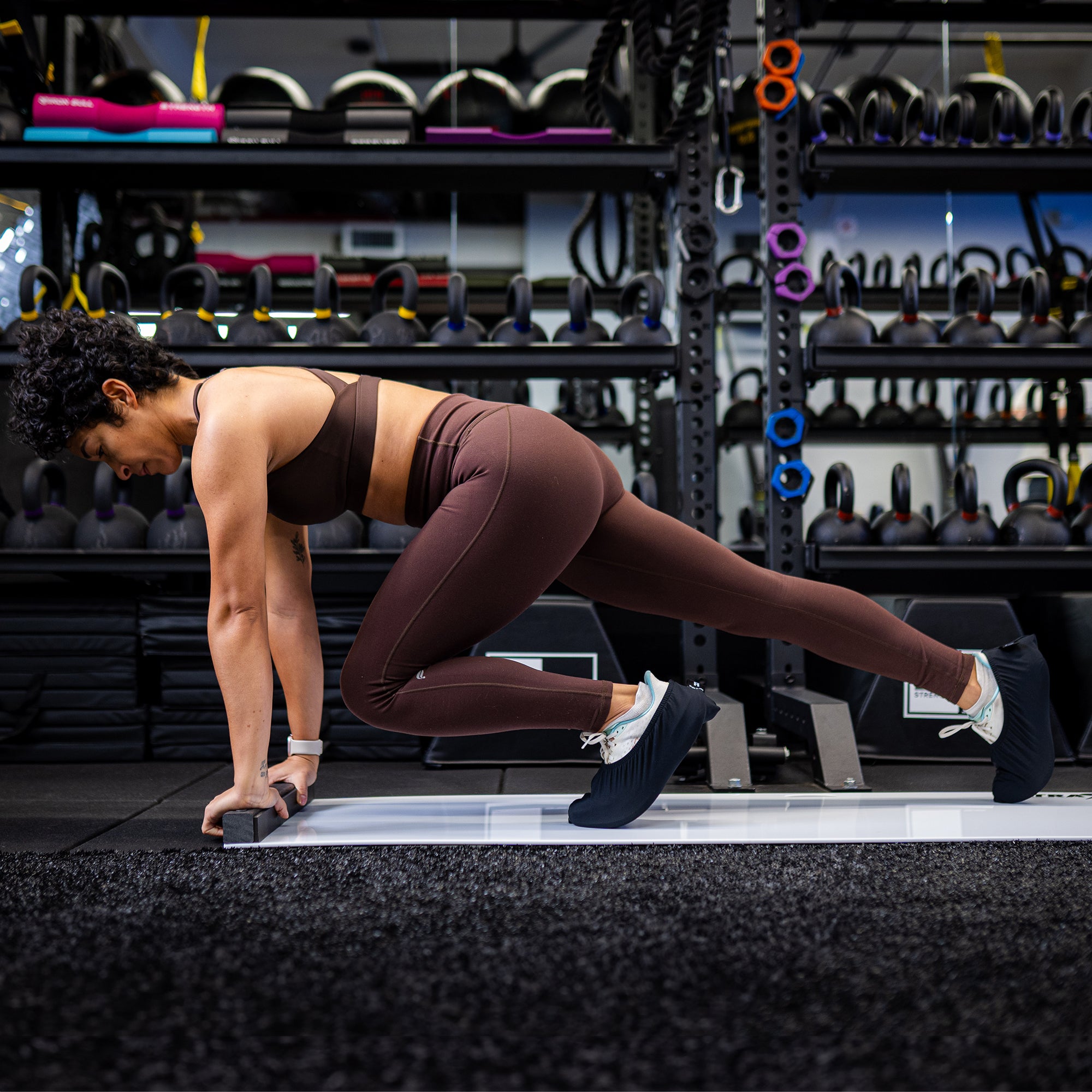
Every skater — from a youth hockey player logging their first hours on the ice to an Olympic speed skater refining their final hundredths of a second — improves through training the stride. UltraSlide gives you the most faithful, most effective, most durable tool to do that anywhere, anytime, at any level.
All UltraSlide slide boards are made in the USA from sustainably sourced materials, backed by a 30-day satisfaction guarantee, and built to outlast any training program you put them through.
Questions? Contact us at info@ultraslide.com or call toll-free 800-259-5356