
Introduction
Have you ever finished a workout feeling well accomplished, only to notice that daily movements like carrying and lifting your grocery bags in the house, climbing steep stairs or hills,, getting up from the floor, or picking up or carrying your kids/grandkids still feels difficult, exhausting, or causes pain and discomfort?
For many people, fitness has become about counting/burning calories or checking off another intense workout, but the real goal behind fitness is much larger than that. If the strength you're building in the gym doesn't translate into everyday life, what is it truly preparing you for? To be the strongest person, who is also lacking function?
Functional movement focuses on helping your body move better in your daily life, while building strength, agility, stability, mobility, and confidence that carries beyond your gym workouts or group classes. In this article, we’ll explore what functional movement is, why it matters, and how training in a more effective way can improve the way you move for years (or even decades) to come.
What Is Functional Movement?
It sounds funny because you’d think every movement is…”functional?” But, if you aren’t able to perform a daily movement task with ease or optimal capability, then it’s not as functional as it could be.
Functional movement is about strategically training your body for the activities you will perform in daily life. Unlike traditional bodybuilding, which often focuses on isolating specific muscles (like a triceps extension), functional movement prioritizes movement patterns that you are likely to integrate into your daily movement tasks.
Our bodies do not naturally move in isolation. Every step, lift, reach, twist, and carry requires multiple muscle groups working together as one well-coordinated system. When you reach into the backseat of a car or squat down to garden, your brain isn't thinking about "activating the glutes"; it's coordinating a complex chain of muscles to work together efficiently and safely. The goal of functional training is to help these movement patterns become automatic, allowing your body to move more efficiently while reducing unnecessary strain.
Real-Life Examples of Functional Movement:
- Squatting to pick up a heavy box or a child.
- Reaching overhead to put away dishes.
- Carrying groceries from the car in one trip.
- Mowing the lawn or cleaning up your home.
- Walking up stairs with stability and ease.
- Rotating your torso while lifting an object.
- Getting up and down from the floor while playing with grandchildren.
Why Traditional Workouts Aren’t Always Enough
Many gym environments rely heavily on machines, and while machines are an excellent tool for building raw strength or even rehabilitating your body following a specific injury - but they often isolate muscles in a controlled, linear path rather than a dynamic, functional pathway.
And if we are being honest, real life is rarely linear - so why is your exercise training?
Real life requires multiple muscle groups to work in sync across different planes of motion. Being "strong" in a leg press doesn't always translate to having the balance and core stability needed to safely navigate an icy sidewalk or a hiking trail. The goal isn't just to exercise more, it's to move better and feel stronger, more fluid when moving.
The Benefits of Functional Movement
Transitioning your focus toward functional patterns offers a cascade of benefits for both your physical health and your mental confidence:
- Better Balance: Coordinated movement patterns improve your proprioception (your body's ability to sense its position in space), leading to greater stability.
- Improved Mobility: Functional training encourages moving through a full, healthy range of motion rather than restricted, repetitive paths.
- Injury Prevention: By teaching your body to move efficiently, you reduce the "wear and tear" on joints and help your body tolerate the unpredictable demands of daily life.
- Better Core Stability: True core strength isn't about crunches; it’s about a "zipper up" connection that supports your posture and protects your spine during movement.
- Increased Confidence: There is a unique mental shift that happens when you feel capable and "light" in your daily activities.
- Long-Term Health: Functional movement is a cornerstone of healthy aging, helping you maintain independence and physical agency for as long as possible.
Functional Movement Happens Outside the Gym
There is a huge misconception that "movement" only counts if it happens during a scheduled workout, but in reality we are constantly moving in different planes and can be a great way to keep your body in good standing, to move youthfully and with ease as you age and in different life seasons.
Whether you're gardening, doing household tasks, carrying groceries, walking on the beach, picking up your kids, or hiking, your body is constantly practicing its functional patterns.
So when we train functionally, we aren't just trying to improve our fitness performance in the gym - we are trying to improve the quality of our entire life and wellness. Every movement contributes and matters more than you may think.
How UltraSlide Supports Functional Movement
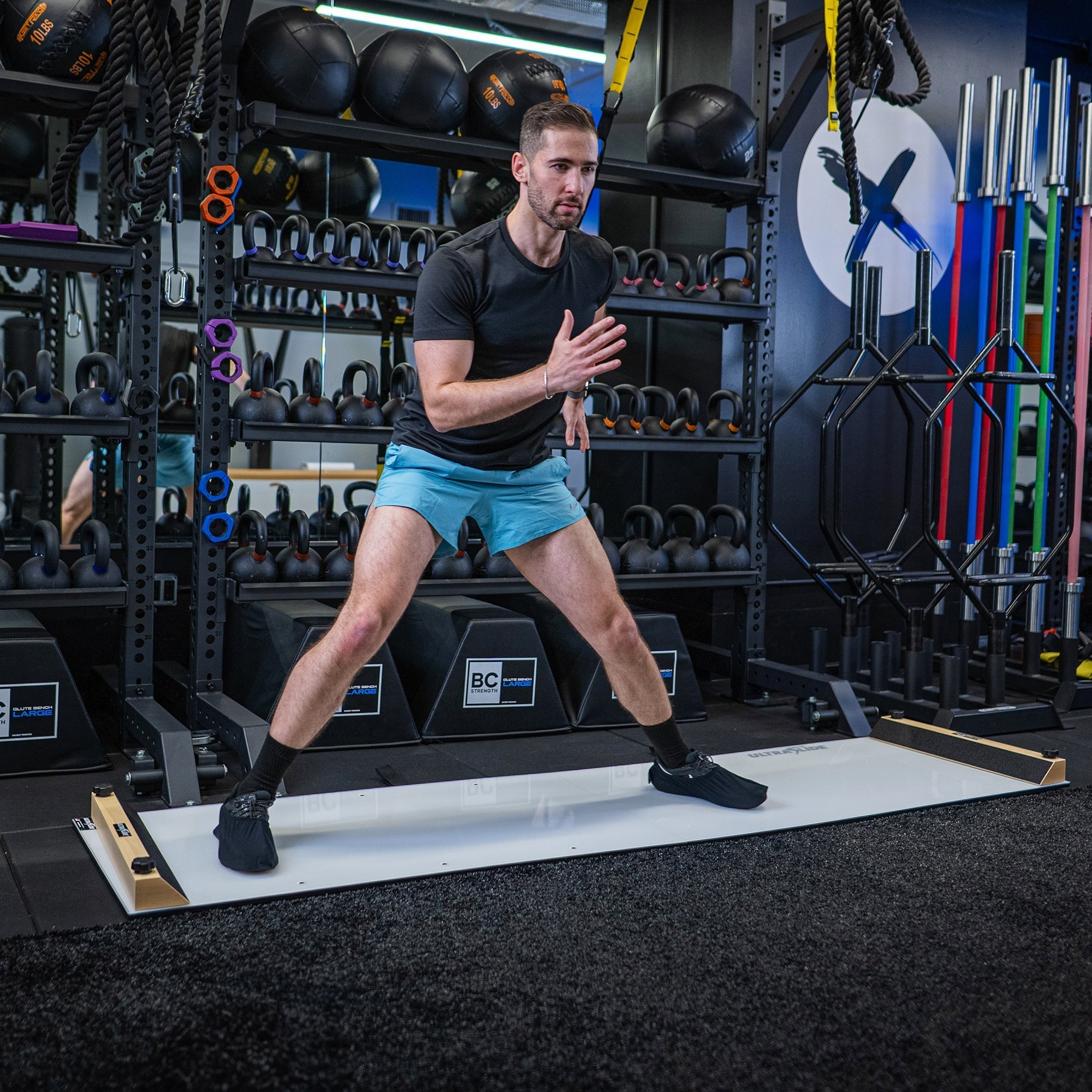
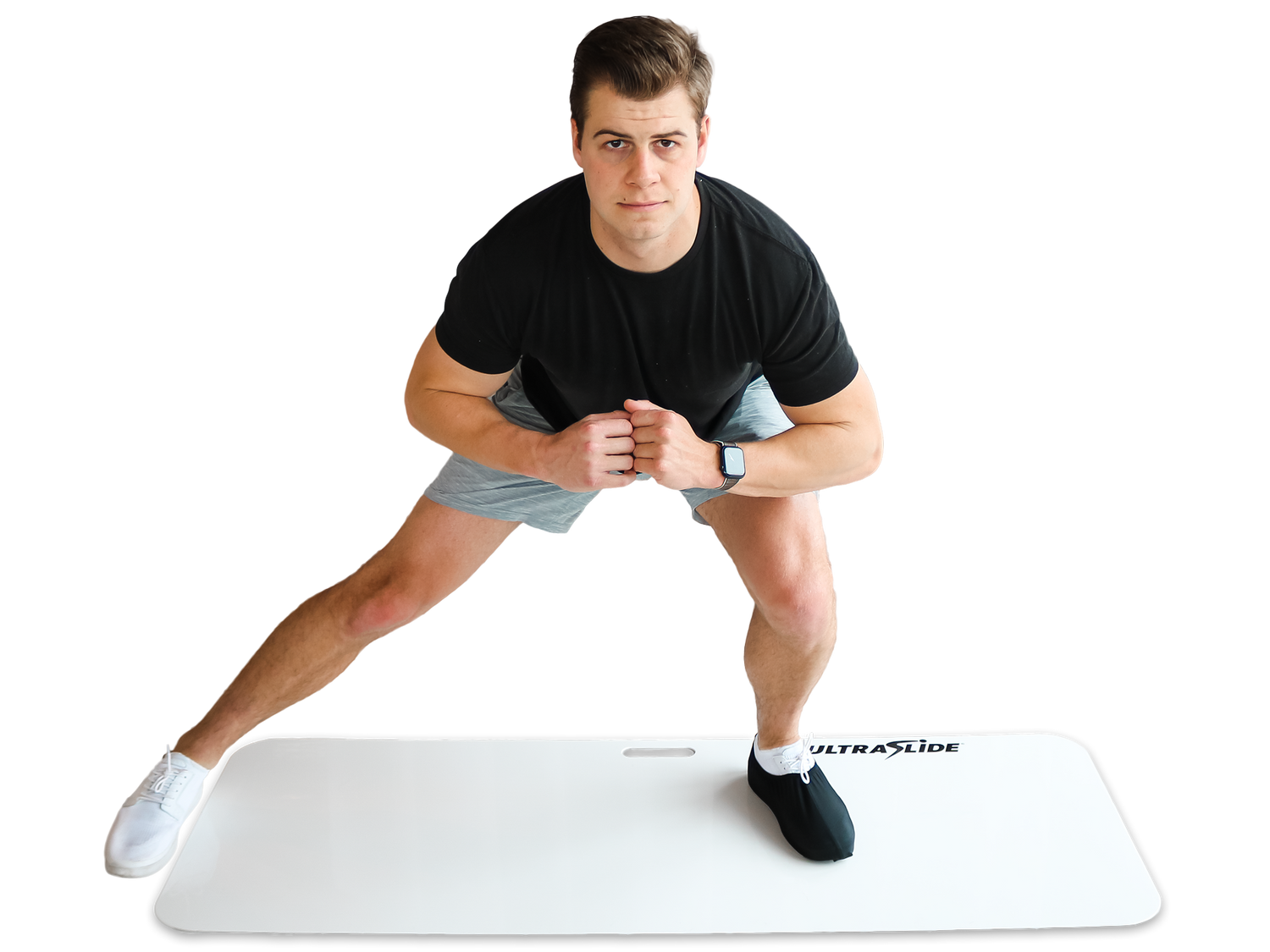
The UltraSlide was designed to bridge the gap between traditional exercise and the multi-directional demands of the real world. Because the board requires you to move laterally (side-to-side), it naturally engages the stabilizing muscles around your hips, core, and ankles that are often overlooked in forward-and-back movements.
- Multi-directional Movement: Challenges the body in planes of motion that mimic real-world shifts and turns.
- Inherent Core Engagement: Maintaining balance on the slide board requires a constant, functional "zip" of the abdominal wall.
- Lateral Agility: Trains side-to-side multi-directional movements that mimic real-world sports like tennis, hockey, and soccer.
- Low-Impact Training: Provides a high-intensity challenge without the jarring impact on joints, making it ideal for longevity and recovery.
- Scalability: From beginner modifications to advanced athletic drills, it grows with your movement journey.
- Injury Prevention: Strengthens neglected inner/outer thigh and hip muscles to protect joint structures from strain.
- Space-Efficient: Slim, portable design stores easily behind a couch or in a closet.
- Cross-Training Value: Complements linear exercises (like running or cycling) by shifting work into the frontal plane.
5 Simple Ways to Improve Functional Movement
- Move in Multiple Directions: Don't just walk or run forward. Incorporate lateral lunges or side-stepping into your routine.
- Prioritize Balance: Practice standing on one leg while brushing your teeth or incorporate single-leg exercises into your workouts.
- Train Your Core Through Movement: Instead of static planks, focus on core engagement while you are reaching, pulling, or pushing.
- Focus on Quality Over Intensity: A perfectly executed slow squat is more "functional" than ten heavy, poorly aligned ones.
- Stay Consistent: Small movement breaks throughout the day often create bigger results than one grueling workout a week.
Conclusion
Functional movement isn’t just about performing the most impressive workout or lifting heavy, it’s about creating a body that moves well for the life you want to live. Whether desire to stay active with your family, improving athletic performance, or maintaining independence as you age, building better movement patterns today can have lasting benefits for years to come.
Because when your body moves well, life simply feels easier.
Interested in learning more about functional movement? Explore UltraSlide’s educational resources and discover simple ways to move better, build confidence, and support your long-term health.